
Book of Dead GO Collect vs Dead or Alive 3: which slot will win more traffic in 2026?
Search traffic in the slot space rarely goes to the game with the loudest mechanics alone. It usually goes to the title that combines brand memory, recognisable search intent, wide casino distribution, and enough novelty to justify fresh content. That is why this comparison matters. On paper, Dead or Alive 3 looks like the more explosive product: bigger max-win positioning, a famous series name, and a volatility profile that naturally attracts streamers, review sites, and players who chase big-hit narratives. Book of Dead GO Collect, though, enters the market with something even more powerful from an SEO and content perspective: one of the most durable slot brands in regulated iGaming, now refreshed with new mechanics and a launch that Play’n GO itself described as record-breaking across players, bets, and GGR.
My view is straightforward: Book of Dead GO Collect is more likely to collect more overall search traffic in 2026, while Dead or Alive 3 is more likely to attract higher-intent niche traffic from experienced slot audiences. That distinction matters. “More traffic” does not always mean “better traffic,” but if the question is pure search volume and content reach, Book of Dead GO Collect has the edge because it stands on a broader base of existing player awareness and easier keyword expansion.
Why brand memory matters more than feature depth
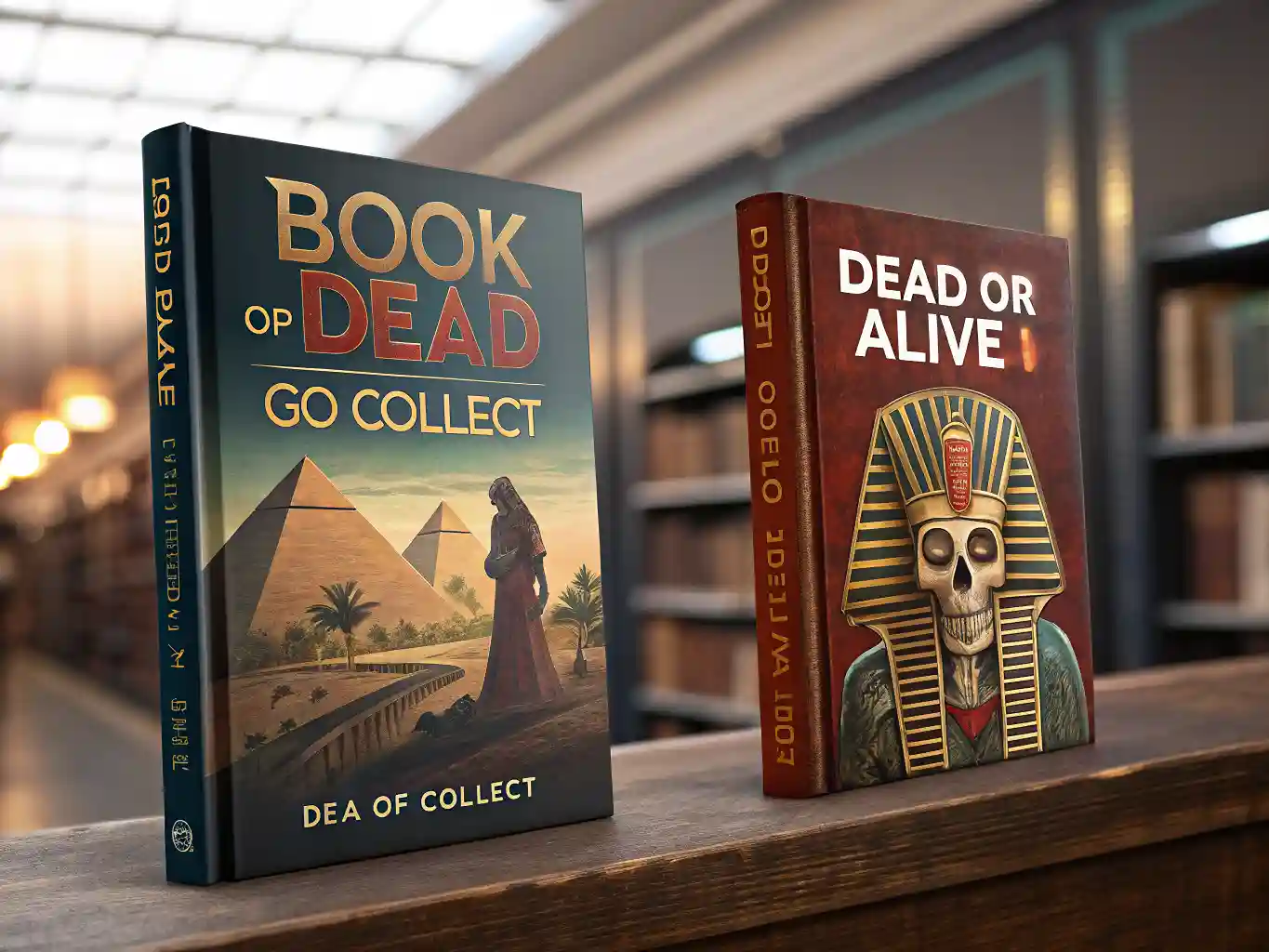
Most slot traffic forecasts fail because they look too hard at feature sheets and not hard enough at search behaviour. People do not search like game designers. They search by memory, habit, recommendation, and brand familiarity. Book of Dead has been one of the defining slot names of the last decade, and its staying power is still publicly acknowledged in industry coverage. Play’n GO positioned Book of Dead GO Collect as a modernised chapter of the same line, keeping the classic expanding-symbol appeal while adding GO Collect, Gold Staters, and a Treasure Vault bonus layer.
That gives publishers, affiliates, and casino blogs a very comfortable content angle. They are not introducing a completely unfamiliar game to a cold audience. They are updating an existing mental bookmark. That is a huge difference. A headline with “Book of Dead” already carries built-in recognition from casual players, returning players, and people who only follow slots from time to time. Even users who do not know what “GO Collect” means will still click because they know the base brand.
Dead or Alive 3 has a strong legacy too, but the shape of that legacy is narrower. The Dead or Alive series is famous among players who actively seek high-volatility western slots and remember sticky wild sessions, brutal variance, and big-win lore. That is a passionate audience, but it is more concentrated. A concentrated audience can generate excellent engagement and great conversion value, yet still lose on raw organic reach to a broader household-style slot brand. Public review and game pages also frame Dead or Alive 3 as a highly volatile sequel built for players who already understand the series appeal, which reinforces that more specialist positioning.
In practical SEO terms, Book of Dead GO Collect has a wider on-ramp. It can capture searchers coming from the original game, from generic Egyptian-slot interest, from “book slot” curiosity, from mobile players, from bonus-buy curiosity where allowed, and from users simply looking for the next version of a known favourite. Dead or Alive 3 can absolutely dominate certain corners of the SERP, especially review and streamer-led discovery, but its audience entry point is less universal.
How the two games attract different kinds of search intent
The traffic race becomes clearer when you look at search intent rather than theme. Book of Dead GO Collect is naturally positioned for broad mixed intent. Some users want a demo. Some want free spins details. Some want to know whether the new version is better than the classic. Some are just familiar with Rich Wilde and click out of recognition. The game’s public descriptions keep the classic expanding-symbol structure but add fresh systems such as GO Collect progression and the Treasure Vault hold-and-respin style feature, which creates a convenient “old favourite, new layer” pitch.
That hybrid positioning is excellent for traffic. It gives content writers many angles without fragmenting the audience too much. A page can target the core game name and still naturally include bonus features, RTP discussion, volatility discussion, comparison with original Book of Dead, and cross-links to similar titles. The intent map is broad and forgiving.
Dead or Alive 3 attracts a more focused, often more informed searcher. The public positioning leans into cinematic presentation, grittier tone, powerful multipliers, Bounty Wilds, Wanted Wilds, sticky-wild free spins, and a very high max-win ceiling. SlotCatalog lists the game at 96.03% RTP and a max win of 33,333x, while public review coverage highlights x2 to x100 wild multipliers and compounding collection interactions.
That is strong fuel for quality traffic, but the psychology is different. A lot of Dead or Alive 3 searches are likely to come from players actively looking for risk, max-win potential, streamer content, and exact feature explanations. Those users often spend more time on detailed reviews and comparison pages, but there may simply be fewer of them than the broad pool of users who type a familiar mainstream slot name into Google.
There is also a content-velocity angle. Book of Dead GO Collect is easier to cover across more publisher types:
• Standard review pages.
• Casino lobby guides and “new slots” roundups.
• “Old vs new” comparison content.
• Bonus and free-play landing pages.
• Mobile and low-stakes intent pages.
• General audience recommendation content.
Dead or Alive 3 fits some of those formats too, but it shines most in heavier review environments. That makes it a superb traffic magnet for strong specialist sites, yet slightly less likely to win the overall traffic war across the entire ecosystem.
Before drawing the line between them, it helps to compare the core signals side by side.
| Factor | Book of Dead GO Collect | Dead or Alive 3 |
|---|---|---|
| Brand recognition | Extremely broad due to long-standing Book of Dead legacy. | Strong, but more concentrated among high-volatility slot fans. |
| Theme accessibility | Familiar Egyptian adventure theme with mass-market appeal. | Gritty western sequel with stronger niche identity. |
| Launch narrative | Classic brand refreshed with new mechanics. | Major sequel built around intensity and cinematic escalation. |
| Publicly highlighted mechanics | Expanding symbols, GO Collect meter, Treasure Vault, re-triggerable free spins. | Wanted Wilds, Bounty Wilds, sticky wild free spins, large multipliers, high max win. |
| Traffic profile | Better suited to broad review, guide, and comparison traffic. | Better suited to expert reviews, volatility-led traffic, and streamer-driven discovery. |
| Likely 2026 SEO winner | Higher overall organic reach. | Higher niche engagement and stronger hardcore interest. |
The reason this table matters is that traffic leadership usually comes from breadth, not just intensity. A game can be more thrilling and still generate less total search demand if its addressable audience is narrower. That is the most likely outcome here.
Why Book of Dead GO Collect has the stronger 2026 traffic case
The biggest argument in favour of Book of Dead GO Collect is not that it is automatically the better game. It is that it has the cleaner road to scale.
Play’n GO stated in early March 2026 that the game delivered record performance across players, bets, and GGR in regulated markets worldwide. That claim comes from the supplier, so it should be read as promotional company data rather than neutral market research, but it is still an important signal because suppliers rarely spotlight a launch this aggressively unless early uptake has been genuinely strong.
The timing also helps. A late-February 2026 release means the title landed early enough in the year to build momentum, earn comparison content, gather user reviews, and secure widespread indexation across casino and affiliate sites while still feeling fresh. Public pages describe it as a 5×3 high-volatility game with the classic book identity intact and fresh layer systems added on top. That combination is exactly what search likes: recognisable topic, new angle, repeatable content hooks.
There is another practical point. “Book of Dead” is a phrase that already exists in countless navigational, informational, and transactional journeys. That creates spillover. Even users looking for the original can end up discovering the GO Collect version through internal links, SERP features, comparison articles, and casino lobbies. From a publisher’s point of view, that makes Book of Dead GO Collect easier to rank into an existing content cluster than a more standalone release.
It is also easier to refresh older assets around it. Sites with long-standing Book of Dead coverage do not need to invent a new topical universe. They can update, expand, and interlink what they already have. That is one of the strongest, least discussed reasons a sequel or spin-off wins traffic: editors can move faster because the cluster already exists.
The game’s mechanics also widen its editorial appeal. The classic expanding-symbol free spins remain easy for casual readers to understand, while GO Collect and Treasure Vault introduce enough added depth for comparison pieces and feature explainers. It is not too simple to feel stale, and not too complex to scare off mainstream traffic. That middle ground is extremely valuable.
Where Dead or Alive 3 can still outperform
Saying Book of Dead GO Collect will likely win more traffic does not mean Dead or Alive 3 is a weaker SEO asset. In some environments, it may be the better one.
Dead or Alive 3 appears built for audiences that love spectacle, variance, and hard-edged win potential. Official and review pages highlight a cinematic sequel approach, sticky wild free spins, powerful multipliers, and major payout potential, with public listings showing a much higher headline max win than Book of Dead GO Collect.
That matters because some traffic is not broad traffic. Some traffic comes from communities that create disproportionate buzz. High-volatility slot fans are more likely to watch long-form gameplay, discuss risk profiles in forums, search for exact mechanics, compare RTP and maximum win ceilings, and revisit content more than once. Dead or Alive 3 is very well placed to benefit from that behaviour.
It may also attract stronger click-through in titles and thumbnails built around drama. A slot framed around train robberies, bounty hunters, sticky wild chaos, x100 multipliers, and 33,333x potential naturally lends itself to more aggressive editorial packaging. That is useful on YouTube, on review portals, and on affiliate pages that depend on curiosity and adrenaline rather than brand comfort.
There is a second advantage: sequel gravity. “Dead or Alive 3” is a natural search phrase for players who already know the first two games. Those users do not need much persuasion. They arrive with a built-in question: did the new one keep the spirit of the series or ruin it? That tension can drive very good engagement. Comparison pages, feature breakdowns, and “is it better than DOA 2?” content may perform especially well.
So if the real business question is not “which slot gets more total traffic?” but “which slot gives a specialist review site stronger authority and deeper user engagement?”, Dead or Alive 3 has a serious claim. It may lose on width and still win on intensity.
What publishers and affiliates should expect from each title
For content strategy, the difference between the two games is simple. Book of Dead GO Collect is the easier traffic engine. Dead or Alive 3 is the sharper differentiation play.
A mainstream casino blog, a broad review portal, or a site that depends on large volumes of mid-intent organic visitors will usually get more mileage from Book of Dead GO Collect. The game supports review pages, comparison pages, update pieces, game-guide content, “best Book of Dead alternatives” lists, and bonus-oriented landing pages without feeling forced. Because the base brand is so established, even users who are not actively hunting for the game may still click when they see it in a familiar cluster.
Dead or Alive 3 is better suited to sites that know how to monetise a more demanding audience. That can mean long-form expert reviews, volatility-led editorial, max-win database content, RTP comparison pages, and streamer-friendly coverage. It is also likely to produce stronger dwell time on content that explains its systems well, because the audience is more prepared to study mechanics before playing.
From a pure editorial standpoint, Book of Dead GO Collect gives more room for softer, broader, evergreen phrasing. Dead or Alive 3 rewards sharper language and deeper analysis. One invites discovery through familiarity. The other invites discovery through intensity.
This is why I would separate the two outcomes like this:
If the goal is highest total 2026 organic traffic, choose Book of Dead GO Collect.
If the goal is attracting experienced slot players who care about mechanics, risk, and upside, Dead or Alive 3 may deliver better-value traffic per visitor.
That distinction is usually where smart slot content strategies are won. The market often overpraises the game that feels more exciting and underestimates the one with stronger brand gravity. Search engines do not reward excitement by itself. They reward relevance to what people actually type and click.
Final verdict
Book of Dead GO Collect is the safer bet to win the traffic race in 2026. It has the broader search surface, the more universal brand memory, and the more scalable publishing model. It combines nostalgia and novelty in a way that is unusually search-friendly, and its launch signals were strong enough for Play’n GO to publicly celebrate record performance very early in its life cycle.
Dead or Alive 3 should not be underestimated. It may become the more talked-about game in hardcore circles, and it may outperform in engagement-heavy environments where users care deeply about volatility, win potential, and sequel identity. But when the question is which slot is more likely to gather more total traffic, the answer is still Book of Dead GO Collect.
The simplest way to say it is this: Book of Dead GO Collect is built to reach more people, while Dead or Alive 3 is built to hit harder with the right people. In SEO terms, reach usually wins the headline contest.